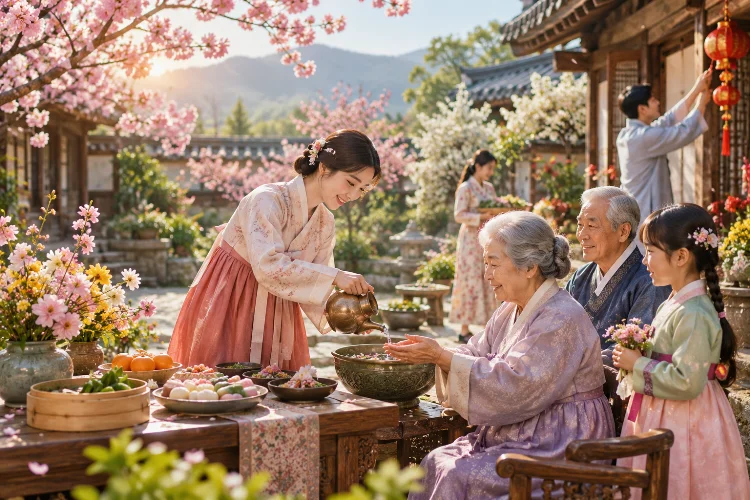
Spring is often described as the season of new beginnings, but “renewal” does not look the same everywhere. In one culture, it may mean sitting beneath cherry blossoms for a few fleeting days.
Somewhere else, families clean ancestral graves, throw colored powder into the air, prepare symbolic foods, or pour water over the hands of respected elders.
Looking at spring renewal traditions across Asian cultures reveals how climate, religion, agriculture, family structure, and local history shape seasonal celebrations.
Even the meaning of spring varies across the continent. Temperate Japan experiences obvious seasonal changes, while tropical Southeast Asia follows different environmental rhythms.
West and Central Asian communities may connect renewal with the spring equinox, while South Asian calendars combine lunar cycles, regional seasons, and religious mythology.
What links these traditions is not one universal ceremony. Instead, people repeatedly use seasonal change as a moment to reorganize relationships, remember ancestors, forgive old tensions, enjoy nature, and imagine a more fortunate year ahead.
Spring Does Not Mean the Same Thing Everywhere in Asia
Asia covers enormous climatic and cultural regions, so it is misleading to assume that every spring festival developed from the same seasonal conditions.
In Japan, warmer temperatures bring highly visible flowering cycles. In northern India, the end of winter and arrival of spring help frame celebrations such as Holi.
Iranian and Central Asian traditions connect Nowruz directly with the spring equinox. Thailand’s Songkran, meanwhile, occurs in mid-April after the rice harvest and during one of the hottest periods of the year rather than a temperate-style spring.
UNESCO explains that Songkran marks the traditional Thai New Year and is connected with the sun’s movement into Aries.
This difference is important.
Seasonal celebrations do not simply respond to temperature. They combine astronomy, agriculture, religious calendars, historical memory, and social expectations.
The result is a wide range of renewal traditons that can happen at roughly similar times while expressing completely different ideas.
Japan’s Hanami Finds Renewal in Brief Cherry Blossoms
Few spring images are as internationally recognizable as Japanese cherry blossoms.
During hanami, people gather beneath flowering cherry trees to eat, talk, relax, and appreciate the blossoms.
The Japan National Tourism Organization notes that cherry blossom flowering varies by location and year, with many areas experiencing peak bloom between March and April.
The symbolism goes deeper than pretty scenery.
JNTO describes sakura as closely tied to Japanese history and identity, noting associations with impermanence, hope, renewal, and older agricultural practices. Cherry blossoms were historically observed in connection with expectations for the year’s harvest.
Their short life is especially significant.
Full bloom can last only a brief period before petals begin falling. That temporary beauty encourages people to appreciate something precisely because it cannot remain unchanged.
Spring renewal in this context is therefore not simply about starting fresh.
It also carries an awareness that every new beginning is temporary.
Hanami turns seasonal observation into a social experience, bringing friends, families, and coworkers together under the same changing trees.
China’s Qingming Combines Ancestor Memory With Spring Vitality
China’s Qingming Festival offers a very different interpretation of spring.
Rather than focusing mainly on flowers or celebration, Qingming combines ancestor remembrance with the seasonal return of outdoor life.
The festival takes place shortly after the spring equinox. Families traditionally visit ancestral graves, clean burial sites, make food offerings, burn incense, and honor deceased relatives.
The Smithsonian National Museum of Asian Art describes Qingming as a tradition observed for more than 2,500 years and strongly connected with filial piety.
Yet Qingming is not entirely solemn.
After visiting graves, families may enjoy spring outings, picnics, kite flying, and seasonal foods such as green qingtuan dumplings. Smithsonian material emphasizes that the festival also contains themes of nature, renewal, and vitality.
That mixture makes Qingming particularly interesting.
Spring does not require forgetting the past.
Instead, renewed landscapes create an appropriate moment to reconnect with earlier generations. The living enjoy the new season while maintaining relationships with family history.
Renewal and remembrance exist side by side.
India’s Holi Turns Seasonal Change Into Color
In many parts of India, spring arrives with one of the world’s most visually dramatic festivals: Holi.
Celebrated around the full moon of the Hindu month of Phalguna, usually in February or March, Holi is famous for colored powders and water thrown between friends, relatives, neighbors, and strangers.
India’s Ministry of Tourism describes Holi as a festival welcoming spring and notes that traditions vary substantially across regions. Celebrations can include music, dancing, processions, colored powders, and religious customs connected with Hindu mythology.
Holi also contains themes of social renewal.
Participants visit others, exchange greetings, celebrate relationships, and in many settings temporarily loosen some everyday social boundaries.
The night before the main color celebration, Holika Dahan involves bonfires in many communities. The ceremony is connected with the story of Prahlad and Holika and symbolizes the triumph of good over evil.
Spring renewal here becomes energetic rather than quiet.
Instead of observing a delicate flower or visiting ancestral graves, people fill public spaces with color, noise, food, laughter, and movement.
The season is experienced through collective release.
Nowruz Makes the Spring Equinox a New Year
Across Iran, Central Asia, the Caucasus, and neighboring regions, Nowruz provides perhaps the clearest connection between spring and the beginning of a new year.
The name means “new day.”
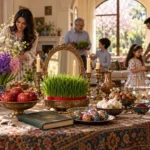
UNESCO describes Nowruz as an ancestral celebration marking the first day of spring and the renewal of nature. Celebrated around March 21, its traditions have developed across numerous countries for more than 3,000 years.
The celebration can include cleaning homes, wearing new clothing, visiting relatives, preparing special meals, exchanging gifts, and participating in local games or performances.
Customs vary widely.
Some Iranian traditions include fire-related ceremonies before the New Year, while communities elsewhere prepare distinctive dishes, decorate eggs, participate in wrestling, or welcome sunrise.
UNESCO emphasizes that the shared festival has developed many local forms across its enormous geographic range.
Renewal is therefore both cosmic and domestic.
The equinox signals a change in nature, while families symbolically reorganize everyday life.
Old disagreements may be settled, houses refreshed, relatives visited, and the new year welcomed with hopes for abundance and harmony.
Thailand’s Songkran Uses Water to Wash Away the Old Year
Songkran demonstrates why Asian spring traditions cannot be explained through temperate seasons alone.
Thailand’s traditional New Year occurs in mid-April, after the rice harvest and during intense seasonal heat. UNESCO inscribed Songkran on the Representative List of the Intangible Cultural Heritage of Humanity in 2023.
Internationally, Songkran is famous for enormous public water fights.
Traditional meanings, however, are more layered.
Water may be poured respectfully over elders, used to bathe important Buddha images, and shared among family and community members. UNESCO describes the water as symbolizing cleansing, reverence, good fortune, and the washing away of misfortune.
Family reunion is equally important.
People return home, honor older adults and ancestors, make merit, share meals, and pray for prosperity in the coming year.
This makes Songkran a powerful example of renewal through cleansing.
Where Japanese hanami emphasizes fleeting blossoms and Holi emphasizes color, Thai celebratons place water at the center of transition.
The material changes, but the deeper goal – entering a new cycle properly – remains recognizable.
Renewal Traditions Strengthen Family and Community Bonds
Spring festivals often appear to celebrate nature, but human relationships are just as important.
Qingming reconnects families with ancestors. Songkran emphasizes respect for elders. Nowruz encourages family visits and reconciliation. Holi creates opportunities for communal celebration, while hanami turns seasonal observation into shared leisure.
This social dimension helps traditions survive.
A flower blooms whether people gather beneath it or not. Rivers flow regardless of ceremony. Seasons change without festivals.
Culture begins when communities attach meaning to those events and repeat particular responses across generations.
Children learn which foods belong to a festival, how elders should be greeted, where ancestors are remembered, what clothes are worn, and which actions signal the beginning of something new.
Eventually, seasonal renewal becomes cultural memory.
It is no longer simply “spring has arrived.”
It becomes “this is what our comunity does when this moment arrives.”
Similar Themes Do Not Mean Identical Traditions
When comparing Asian spring traditions, common themes quickly appear.
Cleaning is associated with starting again. Water can represent renewal. New clothing marks transition. Food brings families together. Flowers express the changing season, while ancestor rituals connect present communities with the past.
But similar symbols should not be treated as interchangeable.
Water during Songkran operates within Thai Buddhist, family, and New Year traditions. Holi’s colors belong to Hindu stories and highly diverse regional customs.
Qingming connects spring with Confucian-influenced ideas of filial respect, while Nowruz has its own historical development across numerous religious and ethnic communities.
The cultural context creates the meaning.
That is what makes comparison useful.
Instead of searching for one universal “Asian spring festival,” looking at differences reveals how communities use seasonal change to express their own ideas about time, nature, family, spirituality, and belonging.
Spring renewal traditions across Asia demonstrate that a new season can inspire remarkably different cultural responses.
Japan celebrates the temporary beauty of sakura through hanami. Chinese families combine spring vitality with ancestral remembrance during Qingming.
India welcomes seasonal change through the colors and communal energy of Holi, while Nowruz connects the equinox with a new year across West and Central Asia.
Thailand’s Songkran uses water, family reunion, and respect for elders to mark another kind of seasonal transition.
The details differ because climate, religion, history, and local calendars differ too.
To understand any spring festival more deeply, look beyond its most colorful public custom. The foods, family rituals, landscapes, and beliefs behind it often reveal the real meaning of renewal.