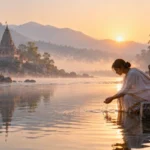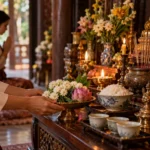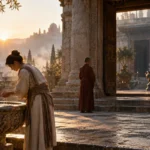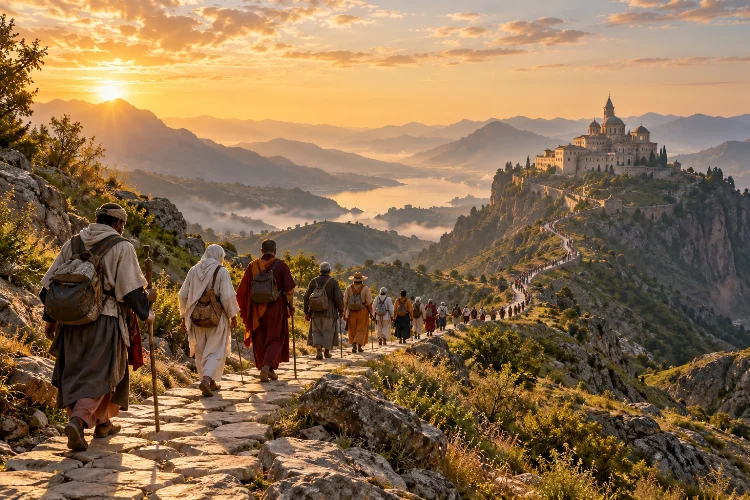
Walking hundreds of kilometers to a shrine may sound exhausting. Traveling across continents to join millions of strangers in the same religious ceremonies can seem even more demanding.
Yet pilgrimage has remained an important part of spiritual life for centuries because the journey often means much more than reaching a destination.
Pilgrimage rituals reinforce cultural and religious identity by turning belief into physical experience. Pilgrims walk particular routes, wear recognizable clothing, recite prayers, visit sacred locations, perform ceremonies, and interact with people who share similar traditions.
The experience can connect an individual with a much larger story.
A Muslim performing Hajj follows rituals connected with Islamic sacred history. Hindu pilgrims gathering at Kumbh Mela enter rivers regarded as sacred.
Christians walking the Camino de Santiago follow routes used for centuries, while Buddhist pilgrims in Japan travel between temples associated with Kūkai.
These journeys differ dramatically in theology and practice. Yet all demonstrate how movement through sacred landscapes can transform religious tradition into something people physically experience, remember, and pass forward.
Pilgrimage Turns Belief Into a Physical Journey
Religion can involve ideas that are difficult to see: faith, devotion, repentance, spiritual discipline, or connection with the divine.
Pilgrimage makes those ideas physical.
A pilgrim must leave familiar surroundings and move toward a destination considered spiritually meaningful. That movement may involve walking, fasting, prayer, special clothing, bathing, offerings, or following a prescribed route.
The difficulty can be part of the experience.
Long distances, unfamiliar environments, crowds, heat, rain, or physical exhaustion can interrupt everyday routines. The pilgrim temporarily enters a different rhythm in which spiritual goals receive unusual attention.
This does not mean every pilgrim experiences the same transformation. People travel for different reasons, including faith, family tradition, healing, curiosity, personal reflection, or even cultural interest.
Still, the journey creates a clear separation between ordinary life and sacred travel.
Hajj Creates a Powerful Shared Muslim Experience
Few pilgrimages demonstrate collective religious identity as clearly as Hajj.
Hajj is one of the Five Pillars of Islam and is obligatory once in a lifetime for Muslims who meet the relevant conditions, including physical and financial capability. Pilgrims gather in and around Makkah during specific days of Dhu al-Hijjah.
The journey involves a defined sequence of rites, including entering the state of ihram, standing at Arafat, circumambulating the Kaaba during tawaf, and traveling between sacred locations.
These rituals give Muslims from very different cultures a shared religious framework.
Pilgrims may arrive speaking Indonesian, Arabic, Turkish, Hausa, Urdu, English, or hundreds of other languages. Their national histories and social backgrounds differ enormously, yet everyone participates in the same sacred journey.
For male pilgrims, the simple garments associated with ihram also create a striking visual similarity.
The ritual does not magically eliminate every social difference, but it provides a simbolic experience in which religious belonging becomes more important than many everyday distinctions.
Hajj therefore connects personal devotion with the global Muslim community.
Kumbh Mela Connects Pilgrimage With Sacred Geography
Sacred geography plays a central role in many Hindu pilgrimage traditions.
The Kumbh Mela demonstrates this relationship on an enormous scale. The gathering rotates between Prayagraj, Haridwar, Ujjain, and Nashik, with pilgrims participating in ritual bathing at sacred rivers.
UNESCO inscribed Kumbh Mela on the Representative List of the Intangible Cultural Heritage of Humanity in 2017.
It describes the gathering as the world’s largest peaceful congregation of pilgrims and emphasizes its combination of spiritual practices, ritual traditions, social customs, oral transmission, and cultural knowledge.
Bathing is important because the landscape itself carries religious meaning.
The river is not simply scenery surrounding the ceremony. Sacred water becomes an active part of the pilgrimage experience.
At the same time, the gathering reinforces collective memory.
Teachers, ascetics, families, religious organizations, and pilgrims participate in practices transmitted across generations. UNESCO specifically notes the relationship between Kumbh Mela and communities’ perceptions of their own history and memory.
Pilgrimage therefore connects identity not only with belief but also with particular places.
The Camino de Santiago Preserves Christian Cultural Memory
Pilgrimage can continue shaping identity long after the historical period in which a route first became famous.
The Camino de Santiago is a good example.
Christian pilgrims have traveled toward Santiago de Compostela in northwestern Spain for roughly a thousand years. The destination is traditionally associated with the tomb of the apostle St. James the Greater.
By the Middle Ages, Santiago had become one of Christianity’s major pilgrimage destinations.
The route produced an entire cultural landscape. Churches, monasteries, hospitals, bridges, hostels, roadside crosses, and settlements grew around the movement of pilgrims.
UNESCO notes that the Camino facilitated cultural dialogue and the circulation of ideas while influencing economic and social development across its routes.
Modern walkers have diverse motivations.
Some undertake the Camino explicitly as Christian pilgrimage. Others walk for reflection, heritage, physical challenge, or cultural exploration.
Even so, following the same roads connects modern travelers with generations who moved through the landscape before them.
The path itself becomes cultural memory.
Shikoku Pilgrimage Builds Identity Through Repetition
Japan’s Shikoku Henro offers another interesting model.
The pilgrimage connects 88 Buddhist temples across the island of Shikoku and is closely associated with Kūkai, also known posthumously as Kōbō Daishi, who founded the Shingon school of Japanese Buddhism.
The complete route extends for around 1,200 kilometers.
Japan’s National Tourism Organization notes that people have walked the pilgrimage for more than 1,200 years.
Traditional pilgrims are recognizable through items such as white clothing and walking staffs, although contemporary participants also travel by bus, car, or in smaller sections.
The journey links temples into a single spiritual landscape.
Visiting one temple may be meaningful, but progressing repeatedly from temple to temple creates a different experience. Prayer, walking, temple etiquette, stamps, clothing, and encounters with local residents become part of a repeated rhythm.
Local hospitality is also important to Shikoku pilgrimage culture.
Japan’s tourism authorities describe the route as combining faith in Kūkai, ascetic practice, and support from local communities.
Identity is therefore reinforced by both the traveler and the comunity that keeps the pilgrimage tradition alive.
Shared Rituals Create a Temporary Community
One reason pilgrimage can feel unusually powerful is that participants often meet people they would never encounter in ordinary life.
Strangers walk together, share meals, wait in queues, pray near one another, exchange advice, and face similar physical challenges.
Anthropologists have sometimes discussed this experience through the idea of communitas – a temporary sense of fellowship that can emerge when ordinary social routines are disrupted.
Real pilgrimages are more complicated than a perfectly equal community.
Differences in wealth, nationality, gender, age, physical ability, and religious authority do not simply disappear.
Still, common rituals can create powerful moments of shared identity.
A pilgrim sees thousands of other people walking the same route or performing the same ceremony and receives visible confirmation that their tradition extends far beyond individual belief.
Religion becomes something collective.
Pilgrimage Clothing and Objects Make Identity Visible
Pilgrimage identity is often recognizable before anyone speaks.
Clothing, staffs, beads, badges, shells, bags, prayer books, and other objects can indicate that someone has entered the temporary role of pilgrim.
On the Camino, the scallop shell became a famous symbol associated with pilgrimage to Santiago.
Shikoku pilgrims are often recognized by white garments, staffs, and distinctive hats. During Hajj, the state of ihram includes particular clothing requirements, especially the two simple unstitched cloths worn by male pilgrims.
Objects can also become personal souvenirs of transformation.
A stamped pilgrim credential, prayer bead, container of sacred water, temple book, or small religious object may later bring the journey back into everyday life.
These items turn memory into something tangible.
Years afterward, simply seeing the object can remind someone of physical exhaustion, prayers, friendships, landscapes, and ceremonies.
Sacred Routes Connect Generations
Pilgrimage is not only movement through space. It is movement through history.
Modern pilgrims frequently know that others followed the same routes long before them.
That awareness changes how a landscape feels.
An old bridge becomes more than transportation because countless earlier pilgrims crossed it. A shrine becomes part of a chain of repeated visits. A mountain path becomes connected with religious teachers, ancestors, saints, or legendary events.
This repetition creates cultural continuity.
UNESCO’s descriptions of the Camino emphasize how its architecture and routes preserve evidence of centuries of pilgrimage, while Kumbh Mela traditions continue through texts, oral knowledge, and teacher-student transmission.
Pilgrimage therefore allows historical memory to survive through practice.
People do not merely learn that their ancestors performed a ritual.
They perform it themselves.
Pilgrimage Can Strengthen Identity After the Journey Ends
The most important part of a pilgrimage may not always happen at the destination.
Returning home can also be significant.
Pilgrims carry stories, memories, photographs, religious objects, new friendships, and interpretations of the journey back into their regular communities.
Someone may describe the pilgrimage to relatives who have never made it. Parents may encourage children to undertake the same journey later. Community organizations may preserve routes, rituals, songs, or hospitality traditions.
This creates a cycle of transmission.
The experience becomes part of personal identity while also strengthening collective traditon.
Modern transportation has changed pilgrimage dramatically. People can now reach distant sacred destinations faster than previous generations could imagine, and social media allows journeys to be shared instantly.
Yet the core pattern remains remarkably durable: leave ordinary life, travel toward sacred meaning, participate in shared rituals, and return carrying the memory of the experience.
Pilgrimage rituals reinforce identity because they make religion and culture physically experienceable. Sacred journeys connect beliefs with landscapes, ceremonies, clothing, objects, memory, and communities.
Hajj unites Muslims from across the world through shared rites. Kumbh Mela connects Hindu pilgrimage with sacred rivers and collective tradition.
The Camino de Santiago preserves centuries of Christian cultural memory, while the Shikoku Henro links Buddhist practice with temples, local hospitality, and the legacy of Kūkai.
Yet pilgrimage is more than reaching a famous destination. The journey itself creates meaning.
To understand a pilgrimage tradition deeply, explore its routes, rituals, stories, and the communities that maintain them. That is where a long journey becomes something greater: a living expression of cultural and religious belonging.